Probiotics, gut microbiome, antibiotic resistance, and necrotizing enterocolitis in preterm infants: a narrative review
DOI:
https://doi.org/10.70347/svsthya.v3i5.163Keywords:
Infan, probiotics, drug resistance, microbial, gastrointestinal microbiome, LactobacillusAbstract
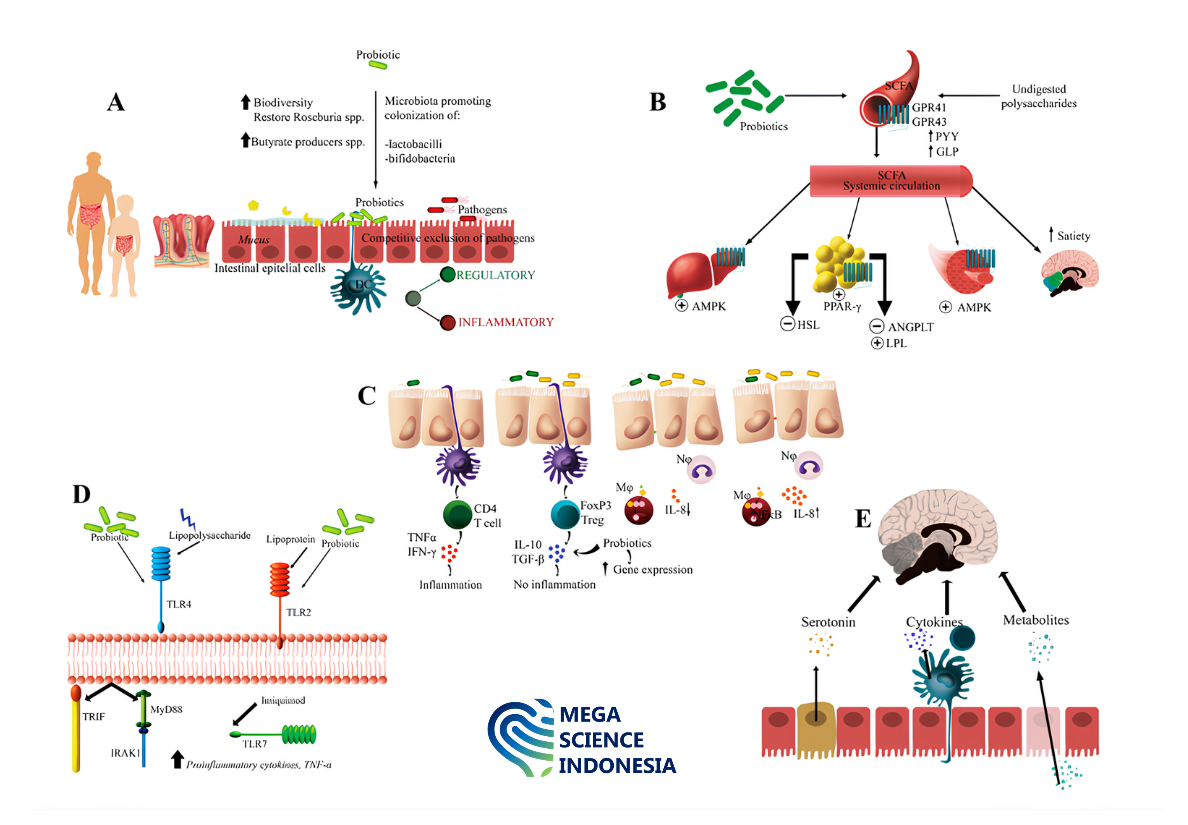
Premature infants are susceptible to infections owing to immature immunity and underdeveloped gut microbiomes. Prolonged antibiotic use increases resistance and dysbiosis, and prematurity remains the leading cause of neonatal death worldwide. This study aimed to evaluate the role of probiotic supplementation in modulating the gut microbiome, antibiotic resistome, and risk of necrotizing enterocolitis (NEC) in premature infants. This study used a narrative review informed by a structured search of PubMed/MEDLINE, Scopus, Web of Science, and Cochrane Library publications from January 2018 to March 2025, supplemented by landmark studies and current guidelines. Eligible sources were used to examine the effects of probiotics in premature infants (<37 weeks gestation) on NEC, the gut microbiota, antibiotic resistance outcomes, and underlying biological mechanisms. Probiotic supplementation with Bifidobacterium and Lactobacillus restored gut microbial communities disrupted by antibiotic exposure. Probiotics act through competition with pathogens, bacteriocin, and organic acid production, which inhibits bacteria and increases secretory IgA. In very preterm or very-low-birth-weight infants, probiotics may reduce NEC (low-certainty evidence) and slightly reduce all-cause mortality (moderate-certainty evidence), but the benefit in extremely preterm or extremely low-birth-weight infants remains uncertain. The effects on the antibiotic resistome are inconsistent, and the benefits appear to increase with exclusive milk feeding. Probiotic supplementation is a strain-specific strategy for preventing NEC in premature infants, but its role in limiting antibiotic resistance remains unestablished.
Downloads
References
Ohuma EO, Moller AB, Bradley E, Chakwera S, Hussain-Alkhateeb L, Lewin A, et al. National, regional, and global estimates of preterm birth in 2020, with trends from 2010: a systematic analysis. Lancet 2023;402:1261-71. https://doi.org/10.1016/S0140-6736(23)00878-4. DOI: https://doi.org/10.1016/S0140-6736(23)00878-4
Khandre V, Potdar J, Keerti A. Preterm birth: an overview. Cureus 2022;14:e33006. https://doi.org/10.7759/cureus.33006. DOI: https://doi.org/10.7759/cureus.33006
Health Development Policy Agency. Thematic report on the Indonesian Health Survey (Survei Kesehatan Indonesia) 2023. Jakarta: Ministry of Health of the Republic of Indonesia; 2024. https://www.badankebijakan.kemkes.go.id/laporan-tematik-ski/.
Schwiertz A, Gruhl B, Löbnitz M, Michel P, Radke M, Blaut M. Development of the intestinal bacterial composition in hospitalized preterm infants in comparison with breast-fed, full-term infants. Pediatr Res 2003;54:393-9. https://doi.org/10.1203/01.PDR.0000078274.74607.7A. DOI: https://doi.org/10.1203/01.PDR.0000078274.74607.7A
Morniroli D, Tiraferri V, Maiocco G, De Rose DU, Cresi F, Coscia A, et al. Beyond survival: the lasting effects of premature birth. Front Pediatr 2023;11:1213243. https://doi.org/10.3389/fped.2023.1213243. DOI: https://doi.org/10.3389/fped.2023.1213243
Munita JM, Arias CA. Mechanisms of antibiotic resistance. Microbiol Spectr 2016;4:VMBF-0016-2015. https://doi.org/10.1128/microbiolspec.VMBF-0016-2015. DOI: https://doi.org/10.1128/microbiolspec.VMBF-0016-2015
Cotten CM, Taylor S, Stoll B, Goldberg RN, Hansen NI, Sánchez PJ, et al. Prolonged duration of initial empirical antibiotic treatment is associated with increased rates of necrotizing enterocolitis and death for extremely low birth weight infants. Pediatrics 2009;123:58-66. https://doi.org/10.1542/peds.2007-3423. DOI: https://doi.org/10.1542/peds.2007-3423
Niño DF, Sodhi CP, Hackam DJ. Necrotizing enterocolitis: new insights into pathogenesis and mechanisms. Nat Rev Gastroenterol Hepatol 2016;13:590-600. https://doi.org/10.1038/nrgastro.2016.119. DOI: https://doi.org/10.1038/nrgastro.2016.119
Neu J, Walker WA. Necrotizing enterocolitis. N Engl J Med 2011;364:255-64. https://doi.org/10.1056/NEJMra1005408. DOI: https://doi.org/10.1056/NEJMra1005408
Patel RM, Underwood MA. Probiotics and necrotizing enterocolitis. Semin Pediatr Surg 2018;27:39-46. https://doi.org/10.1053/j.sempedsurg.2017.11.008. DOI: https://doi.org/10.1053/j.sempedsurg.2017.11.008
Zheng J, Wittouck S, Salvetti E, Franz CMAP, Harris HMB, Mattarelli P, et al. A taxonomic note on the genus Lactobacillus: description of 23 novel genera, emended description of the genus Lactobacillus Beijerinck 1901, and union of Lactobacillaceae and Leuconostocaceae. Int J Syst Evol Microbiol 2020;70:2782-858. https://doi.org/10.1099/ijsem.0.004107. DOI: https://doi.org/10.1099/ijsem.0.004107
Plaza-Diaz J, Ruiz-Ojeda FJ, Gil-Campos M, Gil A. Mechanisms of action of probiotics. Adv Nutr 2019;10:S49-66. https://doi.org/10.1093/advances/nmy063. DOI: https://doi.org/10.1093/advances/nmy063
O'Callaghan A, van Sinderen D. Bifidobacteria and their role as members of the human gut microbiota. Front Microbiol 2016;7:925. https://doi.org/10.3389/fmicb.2016.00925. DOI: https://doi.org/10.3389/fmicb.2016.00925
Fernández L, Langa S, Martín V, Maldonado A, Jiménez E, Martín R, et al. The human milk microbiota: origin and potential roles in health and disease. Pharmacol Res 2013;69:1-10. https://doi.org/10.1016/j.phrs.2012.09.001. DOI: https://doi.org/10.1016/j.phrs.2012.09.001
Syahniar R, Suri AA. Profil mikrobiota ASI dan perannya terhadap saluran cerna bayi [Profile of breast milk microbiota and its role in the infant gastrointestinal tract]. Muhammadiyah J Nutr Food Sci 2020;1:8-17. https://doi.org/10.24853/mjnf.1.1.8-17. DOI: https://doi.org/10.24853/mjnf.1.1.8-17
Quigley M, Embleton ND, McGuire W. Formula versus donor breast milk for feeding preterm or low birth weight infants. Cochrane Database Syst Rev 2018;6:CD002971. https://doi.org/10.1002/14651858.CD002971.pub4. DOI: https://doi.org/10.1002/14651858.CD002971.pub4
Seghesio E, De Geyter C, Vandenplas Y. Probiotics in the prevention and treatment of necrotizing enterocolitis. Pediatr Gastroenterol Hepatol Nutr 2021;24:245-55. https://doi.org/10.5223/pghn.2021.24.3.245. DOI: https://doi.org/10.5223/pghn.2021.24.3.245
Acuna-Gonzalez A, Kujawska M, Youssif M, Atkinson T, Grundy S, Hutchison A, et al. Bifidobacterium bacteraemia is rare with routine probiotics use in preterm infants: a further case report with literature review. Anaerobe 2023;80:102713. https://doi.org/10.1016/j.anaerobe.2023.102713. DOI: https://doi.org/10.1016/j.anaerobe.2023.102713
van den Akker CHP, van Goudoever JB, Shamir R, Domellöf M, Embleton ND, Hojsak I, et al. Probiotics and preterm infants: a position paper by the European Society for Pediatric Gastroenterology Hepatology and Nutrition Committee on Nutrition and the European Society for Pediatric Gastroenterology Hepatology and Nutrition Working Group for Probiotics and Prebiotics. J Pediatr Gastroenterol Nutr 2020;70:664-80. https://doi.org/10.1097/MPG.0000000000002655. DOI: https://doi.org/10.1097/MPG.0000000000002655
Poindexter B, Committee on Fetus and Newborn. Use of probiotics in preterm infants. Pediatrics 2021;147:e2021051485. https://doi.org/10.1542/peds.2021-051485. DOI: https://doi.org/10.1542/peds.2021-051485
Baethge C, Goldbeck-Wood S, Mertens S. SANRA-a scale for the quality assessment of narrative review articles. Res Integr Peer Rev 2019;4:5. https://doi.org/10.1186/s41073-019-0064-8. DOI: https://doi.org/10.1186/s41073-019-0064-8
Gibson MK, Wang B, Ahmadi S, Burnham CAD, Tarr PI, Warner BB, et al. Developmental dynamics of the preterm infant gut microbiota and antibiotic resistome. Nat Microbiol 2016;1:16024. https://doi.org/10.1038/nmicrobiol.2016.24. DOI: https://doi.org/10.1038/nmicrobiol.2016.24
Cotter PD, Ross RP, Hill C. Bacteriocins - a viable alternative to antibiotics? Nat Rev Microbiol 2013;11:95-105. https://doi.org/10.1038/nrmicro2937. DOI: https://doi.org/10.1038/nrmicro2937
Fernandes MA, Delgado L, Almeida AC. The impact of probiotics on antibiotic resistance in newborns: a systematic review. J Neonatal Perinatal Med 2024;17:509-18. https://doi.org/10.3233/NPM-240008. DOI: https://doi.org/10.3233/NPM-240008
Esaiassen E, Hjerde E, Cavanagh JP, Pedersen T, Andresen JH, Rettedal SI, et al. Effects of probiotic supplementation on the gut microbiota and antibiotic resistome development in preterm infants. Front Pediatr 2018;6:347. https://doi.org/10.3389/fped.2018.00347. DOI: https://doi.org/10.3389/fped.2018.00347
Duess JW, Sampah ME, Lopez CM, Tsuboi K, Scheese DJ, Sodhi CP, et al. Necrotizing enterocolitis, gut microbes, and sepsis. Gut Microbes 2023;15:2221470. https://doi.org/10.1080/19490976.2023.2221470. DOI: https://doi.org/10.1080/19490976.2023.2221470
Chandrasekaran P, Weiskirchen S, Weiskirchen R. Effects of probiotics on gut microbiota: an overview. Int J Mol Sci 2024;25:6022. https://doi.org/10.3390/ijms25116022. DOI: https://doi.org/10.3390/ijms25116022
Navarro-Tapia E, Sebastiani G, Sailer S, Toledano LA, Serra-Delgado M, García-Algar Ó, et al. Probiotic supplementation during the perinatal and infant period: effects on gut dysbiosis and disease. Nutrients 2020;12:2243. https://doi.org/10.3390/nu12082243. DOI: https://doi.org/10.3390/nu12082243
Sharif S, Meader N, Oddie SJ, Rojas-Reyes MX, McGuire W. Probiotics to prevent necrotizing enterocolitis in very preterm or very low birth weight infants. Cochrane Database Syst Rev 2023;7:CD005496. https://doi.org/10.1002/14651858.CD005496.pub6. DOI: https://doi.org/10.1002/14651858.CD005496.pub6
Beghetti I, Panizza D, Lenzi J, Gori D, Martini S, Corvaglia L, et al. Probiotics for preventing necrotizing enterocolitis in preterm infants: a network meta-analysis. Nutrients 2021;13:192. https://doi.org/10.3390/nu13010192. DOI: https://doi.org/10.3390/nu13010192
Pokusaeva K, Fitzgerald GF, van Sinderen D. Carbohydrate metabolism in Bifidobacteria. Genes Nutr 2011;6:285-306. https://doi.org/10.1007/s12263-010-0206-6. DOI: https://doi.org/10.1007/s12263-010-0206-6
U.S. Food and Drug Administration. Warning regarding use of probiotics in preterm infants: Dear Healthcare Provider Letter, 29 September 2023. Silver Spring (MD): FDA; 2023. https://www.fda.gov/media/172606/download.
Downloads
Published
How to Cite
Issue
Section
License
Copyright (c) 2026 Thalia Anggrea Noor, Conny Riana Tjampakasari (Author)

This work is licensed under a Creative Commons Attribution-NonCommercial-NoDerivatives 4.0 International License.
This license enables reusers to copy and distribute the material in any medium or format in unadapted form only, for noncommercial purposes only, and only so long as attribution is given to the creator.