Neuromuscular adaptations to plyometric exercises in late-phase ACL reconstruction rehabilitation: A case report
DOI:
https://doi.org/10.70347/svsthya.v2i2.88Keywords:
Anterior cruciate ligament reconstruction, plyometric exercise, postoperative care, sports medicine, general medicineAbstract
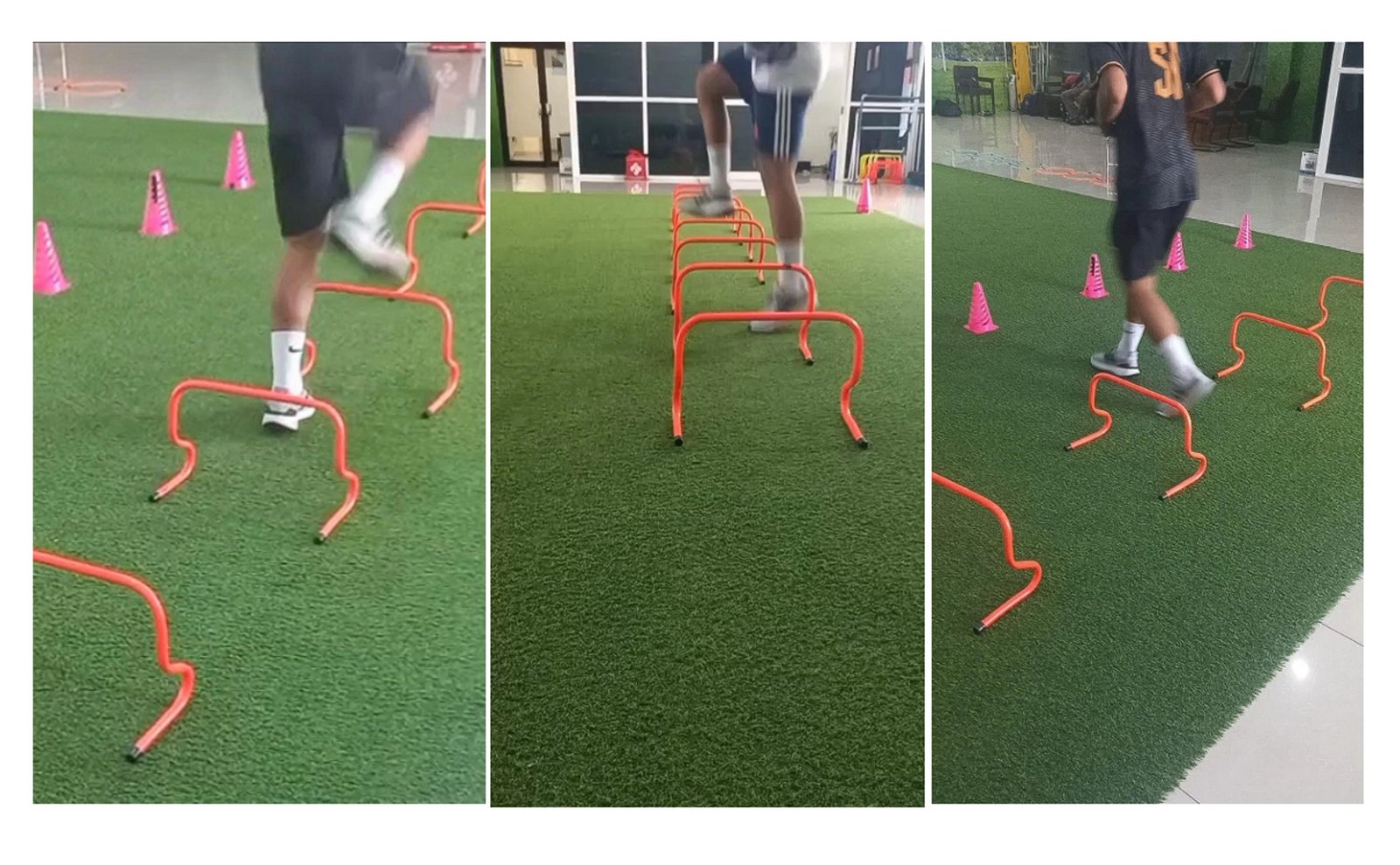
Postanterior cruciate ligament (ACL) reconstruction rehabilitation poses significant challenges in restoring optimal neuromuscular function and athletic performance.This study aimed to evaluate the therapeutic efficacy of a structured plyometric exercise protocol on muscle strength, dynamic balance, and functional outcomes in young athletes who underwent ACL reconstruction. A single-case study of a 16-year-old male soccer athlete who underwent right anterior cruciate ligament (ACL) reconstruction was conducted. The intervention comprised three sessions of progressive plyometric exercises over a seven-day period. Outcomes were assessed via a modified sphygmomanometer test for muscle strength, the Y balance test for dynamic balance, and the Tegner Lysholm knee scoring scale for functional ability. Knee flexor strength improved from 50 to 100 mmHg (100% increase), and extensor strength increased from 110 to 130 mmHg (18.2% increase). The dynamic balance composite score increased from 88% to 108%. The functional performance on the Tegner-Lysholm scale improved from 90 to 95 points, primarily because of reduced pain scores. This case demonstrates that a structured plyometric exercise protocol may effectively improve muscle strength, dynamic balance, and functional performance during late-stage ACL rehabilitation. These findings suggest the potential utility of return-to-sport protocols, although large-scale investigations are warranted.
Downloads
References
Tika FE, Muhammad I, Eljatin DS, Adnyana IMDM. Ankle joint chronic osteomyelitis: A case report and updated insights. Indonesian J Glob Health Res 2019;2:583–98. https://doi.org/10.37287/ijghr.v6i2.2902.
Zavitri LK, Purnaning D. Rehabilitasi pasca operasi cedera anterior cruciate ligament (ACL). J Kedokteran UNRAM 2022;11:1100–6. https://doi.org/10.29303/jk.v11i3.4717.
Wijayasurya S, Setiadi TH. Anterior cruciate ligament injury. J Muara Medika Psikologi Klinis 2021;1:98-1–4. https://doi.org/10.24912/jmmpk.v1i1.12091.
Indriastuti, Pristianto A. Physiotherapy program in post-anterior cruciate ligament reconstruction (ACL) phase I : A case report. Physio J 2021;1:1–9. https://doi.org/10.30787/phyjou.v1i2.795.
Ramadan MI, Santoso TB, Maulana H. Physiotherapy management in the case of postoperative anterior cruciate ligament reconstruction: case report. J Innov Res Knowl 2023;3:4801–10. https://doi.org/10.53625/jirk.v3i1.5861.
Choirunisa F, Wahyuni, Mardianto H. Physiotherapy management of post op ACLR: case report. J Innov Res Knowl 2023;3:4811–6. https://doi.org/10.53625/jirk.v3i1.5813.
Octavia RW, Herawati I, Mardianto H. Physiotherapy management of post ligament anterior cruciate recontruction (ACLR) Phase 1 at RSD KRMT Wongsonegoro, Semarang: case report. J ABDIMAS Indonesia 2024;2:09–17. https://doi.org/10.59841/jurai.v2i1.1002.
Mustiko PL, Taslim AA, Pristianto A. Physiotherapy program in improving dynamic balance of one leg postoperative patient ACL and LCL reconstruction sinistra: Case Report. Physiother Health Sci 2024;7:91–8. https://doi.org/10.22219/physiohs.v7i1.33066.
Cooper R, Hughes M. ACL Melbourne Rehabilitation Guidelines 2.0. Premax 2018:32. https://drmatthewbroadhead.com.au/wp-content/uploads/2023/12/ACL-Rehabilitation-Guide.pdf
Handayani TM, Pristianto A, Mardianto H. The effect of exercise with close kinetic chain technique on improving knee joint scope of motion and knee functional ability in post ACL reconstruction (ACLR) patients: A case report. Academic Physiother Conf Proceed 2024:312–21.
Buckthorpe M, Villa F Della. Recommendations for plyometric training after ACL reconstruction: A clinical commentary. Int J Sports Phys Ther 2021;16:879–95. https://doi.org/10.26603/001c.23549.
Hamdani F, Utomo AWB. The effect of plyometric exercise on increasing arm muscle power in Penjaskesrek STKIP Modern Ngawi Students. J Active Sports 2021;1:28–36. https://ejournal.stkipmodernngawi.ac.id/index.php/JAS/article/view/333
Drouzas V, Katsikas C, Zafeiridis A, Jamurtas AZ, Bogdanis GC. Unilateral plyometric training is superior to volume-matched bilateral training for improving strength, speed and power of lower limbs in preadolescent soccer athletes. J Hum Kinet 2020;74:161–76. https://doi.org/10.2478/hukin-2020-0022
Brito SAF de, Santana M de M, Benfica P do A, Aguiar LT, Gomes G de C, Faria CDC de M. The modified sphygmomanometer test for assessment of muscle strength of community-dwelling older adults in clinical practice: reliability and validity. Disabil Rehabil 2022;44:1–8. https://doi.org/10.1080/09638288.2020.1758804.
Silva BBC, Venturato ACT, Aguiar LT, Filho LFRM, Faria CDCM, Polese JC. Validity and reliability of the modified sphygmomanometer test with fixed stabilization for clinical measurement of muscle strength. J Bodyw Mov Ther 2019;23:844–9. https://doi.org/10.1016/j.jbmt.2019.05.008.
Nurhayati UA, Khotimah S, Ratnawati P. Differences in the effect of Short Foot Exercise and Towel Curl Exercise on dynamic balance in flat foot adolescents. J Physical Therapy UNISA 2022;2:15–26. https://doi.org/10.31101/jitu.2656.
Oleksy T, Mika A, Sulowska-Daszyk I, Szymczyk D, Kuchciak M, Stolarczyk A, et al. Standard RTS criteria effectiveness verification using FMS, Y-balance and TJA in Footballers Following ACL reconstruction and mild lower limb injuries. Sci Rep 2021;11:1–9. https://doi.org/10.1038/s41598-021-81152-4.
Badzlina FA, Susilo TE, Mardianto H. Management physiotherapy after reconstruction of anterior cruciate ligament dextra at RSD K.R.M.T Wongsonegoro Semarang: A case study. Academic Physiother Conf Proceed 2024:362–9.
Prodromidis AD, Thivaios GC, Mourikis A, Erginousakis ID, Nikolaou VS, Vlamis J, et al. Patient-reported outcome measures used on patients with anterior cruciate ligament injury. Cureus 2024; 6(7): e64546. https://doi.org/10.7759/cureus.64546
Komarudin K. Plyometric training in soccer for young children. Sepakbola 2021;1:67–77. http://dx.doi.org/10.33292/sepakbola.v1i2.101.
Alikhani R, Shahrjerdi S, Golpaigany M, Kazemi M. The effect of a six-week plyometric training on dynamic balance and knee proprioception in female badminton players. J Can Chiropr Assoc 2019;63:144–53. https://pmc.ncbi.nlm.nih.gov/articles/PMC6973753/
Haetami M, Awanis A. Improving limb power through the pliometric training method. Jendela Olahraga 2021;6:108–19. http://dx.doi.org/10.26877/jo.v6i2.8642.
Kasmi S, Sariati D, Hammami R, Clark CCT, Chtara M, Hammami A, et al. The effects of different rehabilitation training modalities on isokinetic muscle function and male athletes’ psychological status after anterior cruciate ligament reconstructions. BMC Sports Sci Med Rehabil 2023;15:1–11. https://doi.org/10.1186/s13102-023-00645-z.
Downloads
Published
How to Cite
Issue
Section
License
Copyright (c) 2025 Siti Fadhilah, Arif Pristianto, Halim Mardianto (Author)

This work is licensed under a Creative Commons Attribution-NonCommercial-NoDerivatives 4.0 International License.
This license enables reusers to copy and distribute the material in any medium or format in unadapted form only, for noncommercial purposes only, and only so long as attribution is given to the creator.